By Masoume Erfani
This interview series is funded by the International Development Research Centre (IDRC) through a project entitled ‘Placement, Preservation and Perseverance: Afghan at-risk Scholars, Students and Activists’ (PPP) based in the Department of Law and Legal Studies at Carleton University
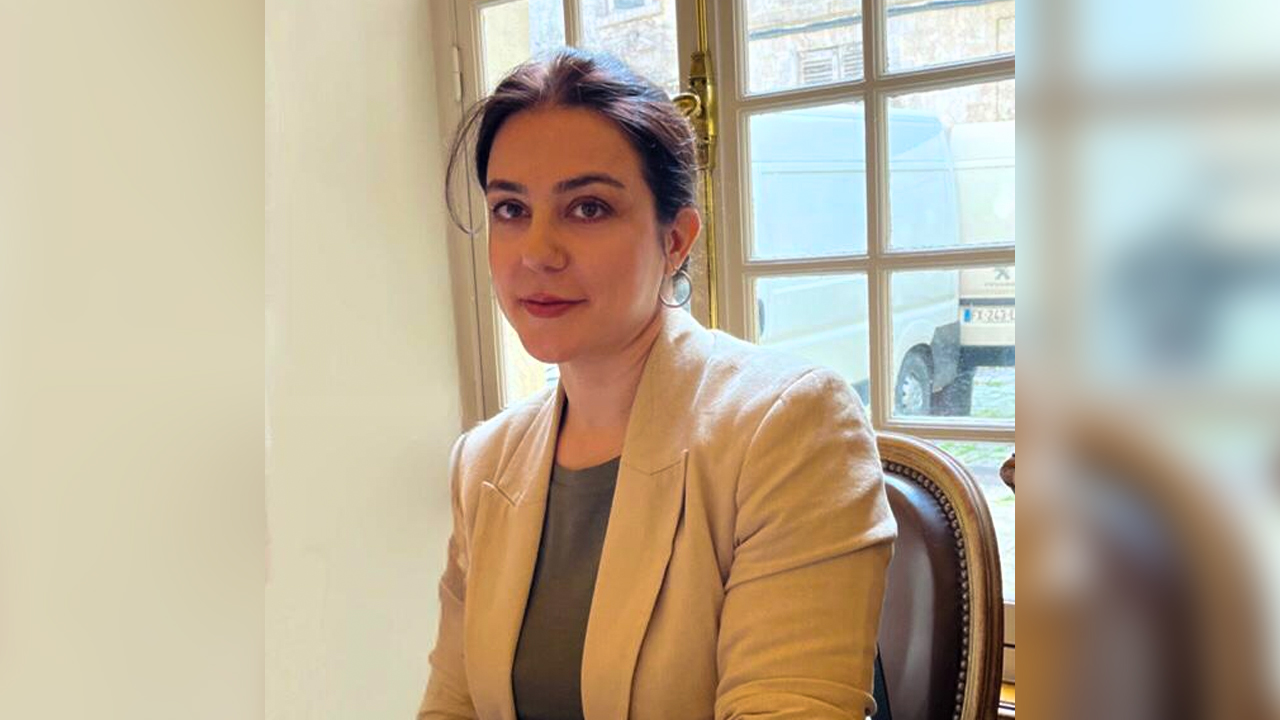
Introduction: Khaleda Khorsand is a writer, journalist, researcher, and activist in the field of gender. Her portfolio includes, along with dozens of articles on gender issues, society, and politics published in domestic and international journals, years of civil activism and human rights advocacy. She is among the founders of the “Journalists’ House” and the “Young Thinkers Foundation” in Herat. Khaleda was active for many years until leaving Afghanistan in 2016 as consultant and head of the media department, “Civil Society and Human Rights Network” in western Afghanistan and as the managing editor of “Radio Mardom” in Herat. She holds a degree in Persian Language and Literature, having also published a collection of short stories.
Nimrokh: How do you view the 20 years of women’s presence across various fields, including media and politics, during the period known as the Republic in Afghanistan?
Khaleda Khorsand: It is now time to reconsider some of our assumptions and inferences in understanding gender discourse in Afghanistan. For example, whenever “women” are mentioned, implicitly, this concept is attributed an independent, active, and influential identity. Misunderstandings that were built on a fabricated reality resulting from urgent political projects at the “Women’s Conference” have lingered for many years. What is raised as the presence and role of women in the past 20 years is in reality the actions of a scattered group with minimal similarities in governmental structures and foreign projects, with their only common identity being “being a woman.”
Gender can be considered a fundamental factor in shaping collective identity. But only being placed in a specific concrete situation with change in intellectual beliefs will activate women’s actions as a collective identity. From my perspective, I don’t see the possibility of a fundamental moral conflict in the Afghan mindset, considering the current societal reality, that could serve as a factor in activating collective and group identities.
In fact, Afghanistan twenty years ago was still a society grappling with tradition, religious radicalism, poverty, and ethnic tensions, just as it is now. It is a values-based society in blatant conflict with humanism and modern rationality. It is natural that most protests and upheavals appear in the form of scattered and unstable social movements which reduce each social issue to a bargaining chip for scoring in gender, ethnic, and tribal competitions. Women’s struggles, despite all the difficulties and suffering imposed on gender activists in Afghanistan, are not exempt from this rule.
Today, after the collapse of the democratic facade in Afghanistan, there is no doubt that the movement for reforming sociopolitical foundations in the past twenty years was an unsuccessful attempt to stabilize a fundamental crisis in the region. For this purpose, a package of consumable democracy and human rights was presented in a very attractive, real, and entertaining facade. Women, individually, became compressed in an urgent project of sociopolitical adaptation in Afghanistan, and their role is worth only this much examination. Some women managed to shine in their projects. Some had a noticeable presence in bureaucratic and tribal mafias. Some were apparently voices and presences in parliament, and some, so-called enlightened and active women’s rights activists, were scatteredly engaged in fierce debates in the virtual space. What actually transpired was a collective effort to understand the historical situation and shape social movements based on others’ emancipatory ideals, as if our collective intellect is never capable of organizing such meaningful and pioneering movements.
Nimrokh: So, do you believe that there has been no change among the people, especially among women and girls, during these twenty years? What are your thoughts on the challenges and opportunities that existed despite all these difficulties?
Khaleda Khorsand: In order to have a comprehensive understanding of the situation of women in the twenty years of the Republic, it is necessary for us to set aside some of our optimism. I know it’s difficult to accept that what we went through and that the hope we had for a bright future for Afghanistan’s women and all its people was little more than a delusion. But this realistic view helps us distance ourselves from the mental gymnastics and take more realistic steps towards building a better future.
In response to the previous question, I mentioned that unfortunately, what we have witnessed in Afghanistan, based on the reasoning I presented, was a reactive and fluid situation. I emphasize that women are also a part of the social, political, and cultural fabric of their communities and cannot simply maneuver outside their prevailing circumstances in this situation. Moreover, merely “being a woman” and even shared historical suffering and injustice are not guaranteed principles for the formation of a collective and activist women’s identity; nor does it absolve them of the cultural disarray and anomalies of the society to which they belong. For example, look at the historical events where in the West, women’s movements flourished based on modern legal rights and individual freedoms. This moral and social framework has not yet even been established for Afghanistan, let alone its women. For this reason, many movements have been accompanied by the disaster of corruption and inefficiency in government and society, turning collective opportunities into ashes for their own group and interests.
Nimrokh: Even with all of this, we still have seen some differences in this 20 year period, so do you believe all these changes and differences were symbolic, and that’s why we are now back to square one?
Khaleda Khorsand: Exactly. How did this unbelievable recoil happen two years after the fall of the Republic? Because so many changes were superficial. I don’t want to say that women’s struggles are superficial or that their goals aren’t real, but it cannot be denied that women’s movements are heavily influenced by the sociopolitical context they occur in. In fact, women’s uprisings and struggles suffer from the contradictory ethical and activist trends of Afghanistan’s renewal movements, which are troubled and confused. Women exhibit cultural characteristics that men do too! The only difference is that men, through paternalistic relationships and placement at the top of the pyramid of unfair power distribution, have more room for tyranny. I have witnessed, many times, that the most vocal women in Afghanistan have a primitive understanding, focused on their personal interests, of freedom, individual rights, justice, and other modern intellectual foundations. Unfortunately, consciously or unconsciously, they reproduce their historical suffering in such patriarchal behaviors. Women who are forceful, irrational, dictatorial, tyrannical, harsh, and corrupt have little difference from the patterns of patriarchal society they reflect.
In fact, women can easily become subjects of a patriarchal system and contribute to its continuation, while themselves being victims of oppression and suffering. Even being aware of the unequal conditions for women does not shape emancipatory thought and action. It is necessary, with vigilance and responsibility, for women to identify cultural, behavioral, ethical, and social similarities they have with their patriarchal subjects and courageously distance oneself from them.
Perspective: You don’t seem to look at the situation with much optimism. However, one of the things we are witnessing today, which no one expected, is that after the fall of Kabul, women are at the forefront of the fight against the Taliban. Where do you think women’s struggles originate from if it wasn’t for the influence of the twenty years of the Republic, and what results do you think it will have?
Khaleda Khorsand: You mentioned “women’s struggles,” but you didn’t say anything about the society that has remained silent in the face of this activism and hasn’t taken a step to support women. That’s the blind spot right there. We have glorified women’s movements and protests in their unique form. Women cannot advance their struggle in social and cultural vacuum. Nothing can stand alone and have a sustainable future.
However, in previous discussions about the uprisings and protests after the fall of the Republic, I expressed my respect, reverence, and admiration for these heroic women. Women from Herat, Kabul, Mazar, Bamyan, and even the farthest corners of Afghanistan stood against Talibanism and risked serious dangers. These struggles are unfortunate because they have imposed heavy costs on those individuals.
Perspective: Do you think during the 20 years before the fall, a meaningful relationship between women and international institutions had been established to create changes in women’s lives with the help of these organizations?
Khaleda Khorsand: It’s possible, but it would have been short-term and temporary. For now, a very heavy atmosphere dominates public opinion in Afghanistan and the world. Everyone wants to know how the Taliban disaster happened and who the main culprit is. The peak of this criticism is directed towards the international community and Western governments. Therefore, these governments try to control the voices of critics and protesters in the world, especially Afghan women, through actions that are not very substantial but more symbolic in their support of women.
However, the important part of the question is precisely this key point of “meaningfulness” in the relationship between women and international institutions. I think of how an unequal relationship can create meaningful and responsible relationships; it’s not a two-way and meaningful bond, but rather a relationship of “supporter” and “supported.”
It is obvious that in such international relations, the real meaning and imperative of an equal relationship do not emerge, as the level of influence and impact between the two parties is not equal, and the powerful party will disregard commitments and agreements whenever deemed necessary. For example, didn’t the international community know what would happen to women under the Taliban, or that they are obligated to listen to the voices and demands of Afghan women based on global human rights values and principles of bilateral relations? They knew well! But national interests and changes in regional policies dictated that they would withhold their support from Afghanistan and turn a blind eye and deaf ear to the clear struggles and criticisms of Afghan women. This situation is the result of the characteristics of a relationship without “meaning” and “reliability.”
The history of these relationships reveals the existential identity of the simple and unaccountable ties of governments and social groups in Afghanistan. Women’s movements, like all parties, groups, and even governments in Afghanistan, have always been outward-focused. Relying on material and ideological support outside the tangible resources of Afghan society has consistently alienated the movements from the body of Afghanistan. It is not unwarranted that the phrase “international community” is one of the most used in discussions about women and “individualism” is the most promoted form of organization. It should be doubted in at least one case that one of the most damaging consequences of this dependence has been the indifference and recklessness of women’s movements and activists in seeking internal legitimacy. The international scene is where most women activists rely on and play a role. They are provided with stages and tribunes, encouraged with or without reason, and receive great prizes. But in reality, these champions of international platforms and virtual spaces have the least chance of survival in the sociopolitical reality of Afghanistan. This level of dependence is not reflective of independent social groups working towards the goal of changes and reforms in their society.
Perspective: How do you envision the future for women?
Khaleda Khorsand: We are entering one of the most complex and disheartening periods in the country’s history. Two scenarios can be considered for the general situation and especially for women. Either we make an effort to overcome this impasse responsibly and wisely, or we close our eyes to the inefficiency of our social, ethical, and political relationships and, as always, blame the “outsiders” for our failures.
Specifically, in order to address the situation of women in Afghanistan, there are certain do’s and don’ts that need to be clearly understood. I consider several aspects of women’s struggles as Achilles’ heels, and I believe that if these weaknesses are addressed responsibly, they can serve as opportunities for the triumph of Afghan women.
Firstly, the “ideological core” of women’s struggles in Afghanistan, namely the fight against “patriarchy,” needs to be reconsidered. For a long time, the framing of discourse and activism in the gender sphere has exacerbated gender disparities in Afghanistan. This discourse seems to have been specifically designed for combat against men, neglecting to understand the extensive dimensions of the “patriarchal system.”
If patriarchy is an “ideological-cultural configuration” that has neglected the entire existence of humanity and all types of humans in various philosophical and social currents, then its components are inequality, injustice, coercion, betrayal, dominance, and perpetual war. I believe that gender inequality is a part of the horrific inefficiency of the patriarchal system, not all of it. The executors and custodians of this historical system are still unable to control the “deviant” human behaviors and continue to pressure the current distorted system for their greater dominance over resources and their utilization for their own benefit.
It is clear that men themselves are subjects and objects of their ideological system. Women, on the other hand, are passive objects and subjects in the established male ethical and social order. In fact, patriarchy is understandable as a structure beyond the “confrontational” framing between women and men and in its systemic and complex dimensions dominating the human existence. Women who choose patriarchal traits and characteristics such as coercion, dominance, control, violence, betrayal, corruption, sectarianism, and narrow-mindedness as methods of struggle essentially put themselves in the cycle of reproducing patriarchal values and, regardless of biological differences, have fundamental similarities to the patriarchal subject.
The next issue is the “existential nature” of women’s movements in Afghanistan, which, following the sociopolitical currents of society, are directed outwardly and alienated from tangible and real internal resources of cultural and political domination. I addressed this point in discussing the “meaningfulness” of the relationship between women and international institutions before.
Apart from the points mentioned, in the current highly challenging circumstances, the action to “organize” and “establish organizations” is of utmost importance in the strategic approach of women’s struggles in Afghanistan.
It may be said that one of the main reasons for the failures of women’s struggles and protests lies in the incorrect understanding of the “social movement” nature and neglect of the political action of “organization.” Women’s movements are considered part of social movements; a collective action aimed at social transformation or changing and amending part of the laws, and it usually takes shape when the power distribution, society’s laws, or decisions made by policymakers and those in power fail to resolve current major issues and meet the needs of more community members.
Although women’s movements in Afghanistan have been rich in historical continuity and purposefulness, they lack organization, focused objectives, formations, and leadership. What we have witnessed in recent years is the attempt of some women to monopolize the struggles of others in the whirlpool of ideology, personal agendas, and competition for leadership positions in women’s movements. In contrast, independent actors in the gender and human rights sphere or women intellectuals have taken on a role that they have chosen for themselves, guiding, preaching, and “mothering” feminism. The content of both movements, from the perspective of the components of “democratic leadership,” has rejected the values, rights, and freedoms of individuals. Democratic leadership methods, in fact, include the ability to organize and create organizations based on trust-building, honesty, and capacity-building among movement members and the women’s masses.
Certainly, the possibility of victory lies in unity, and creating unity is the duty of every woman who desires to play the role of a “leader” and “trailblazer” in society. Writing essays, giving empty speeches, expressing the historical suffering of women with tears and sighs, and spending twenty-four hours a day in insignificant international forums are peripheral roles of a leader.
The main power lies in creating a network of relationships based on trust and integrity, where no woman plays the role of a “patronizing teacher” for another woman.
If women’s movements have the potential for intra-group cohesion, they will also have the chance of “normalization,”; the ability of a movement to garner popular support and engage ordinary people in protest movements.
Finally, I emphasize that in the current severe repression imposed by the Taliban, the continuity of women’s movements inside and outside Afghanistan requires a higher degree of organization, coordination, and organizational formation. Alongside this, a comprehensive understanding of the core idea of women’s struggle, namely a holistic understanding of patriarchy, will strengthen the stable and enduring role of women as political subjects in the public sphere.