This interview series is funded by the International Development Research Centre (IDRC) through a project entitled ‘Placement, Preservation and Perseverance: Afghan at-risk Scholars, Students and Activists’ (PPP) based in the Department of Law and Legal Studies at Carleton University
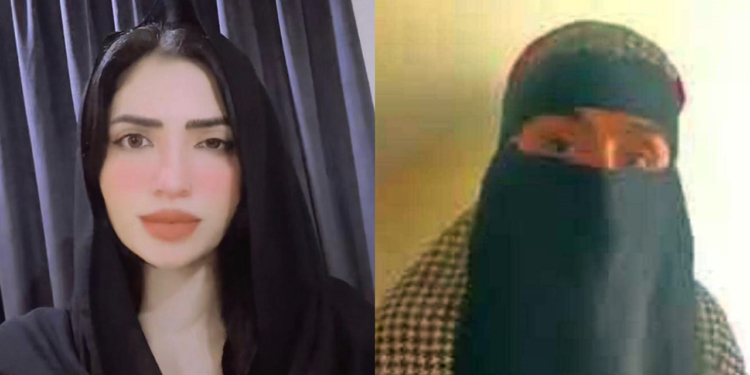
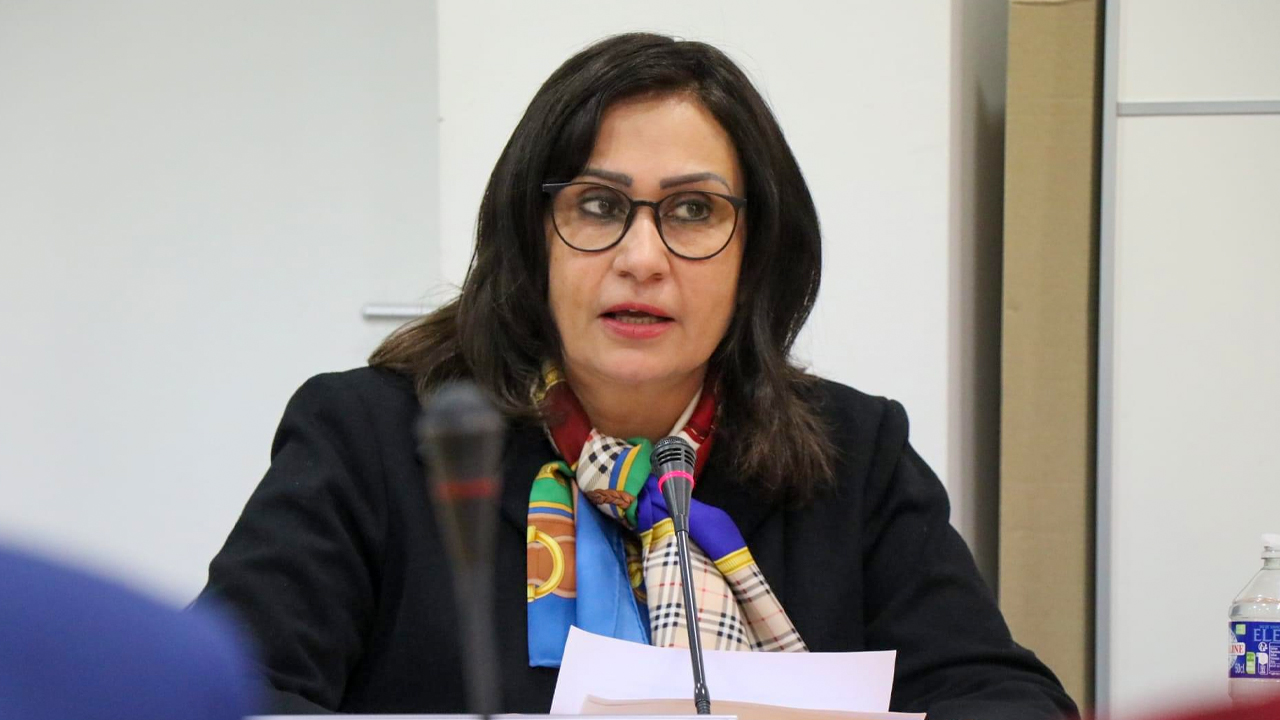
Ms. Manizha Bakhtari is an Afghan politician, writer, and journalist who has served as Afghanistan’s ambassador to both Norway and Austria. Prior to this, Ms. Bakhtari served as the Chief of Staff at the Ministry of Foreign Affairs of Afghanistan and as a lecturer at Kabul University. She holds a bachelor’s degree in journalism and a master’s degree in Persian Language and Literature from Kabul University. Before her diplomatic posts, Bakhtari collaborated with the Cooperation Center for Afghanistan (CCA), a non-governmental organization. She is the author of two journalism books: “The Pleasant World of News and Ethics” which was used as a textbook in the journalism department of Kabul University years ago, and “Angbin Laughter and Sharang Laughter”, a investigation of satire and Afghan satirists. Her other book, “93 Years of Media and Law”, examines the history of Afghan media in light of its laws and regulations. She has also published a collection of stories titled “Three Fairies” which highlights the challenges faced by Afghan women. She was the editor-in-chief of Parwana magazine (a quarterly cultural and literary magazine) for a period of time, and during this time, her novel titled “Four Zoroastrian Daughters” was published in 2023.
Nimrokh: Ms. Bakhtari, considering your years of experience in political and social work, how do you view the 20-year participation of women during the period known as the Republic in Afghanistan?
Manizha Bakhtari: In my belief, the twenty years of women’s participation in various fields were a pivotal point in Afghanistan’s history. During these years, women and girls were extensively able to attend schools and universities and work in important positions within governmental and non-governmental institutions. Additionally, during this period, several laws and regulations were enacted to support women in all aspects of their lives. We cannot ignore the increasing awareness and consciousness generated during these twenty years. However, if we look at the bigger picture, this doesn’t represent the entirety of Afghan women, and these developments mostly took place in urban areas. If we analyze this trend critically, two issues are worth considering: firstly, the resistance from the traditional sector of society emerged strongly against the production of awareness and women’s progress, due to their opposition of gender equality, believing women’s duty is solely to maintain the family and raise children, not participate in society and politics. Historically, every time official schools were established in Afghanistan, took precedence over religious schools, and their knowledge became widespread, the traditional faction of society stood against it with three main agendas: legitimizing religious schools instead of modern ones, eliminating subjects like science and replacing them with religious subjects, and excluding women from any higher education. Educating young girls who have not yet reached maturity solely for learning the basics of religion and solving their daily problems is acceptable for some of them. This group created and reproduced a narrative that during these twenty years; a kind of hatred or resentment towards active and working women in Afghanistan emerged, which was one of the reasons the creation of a widespread and comprehensive women’s movement was hindered.
Another critique we can make on the overall situation is that those twenty years were influenced by the presence of the international community and a market of projects and NGOs. Many of these projects were designed without fully understanding the situation or examining the women’s needs and backgrounds, implemented without careful examination and analysis. This, along with political, ethnic competitions, and other issues, prevented the creation of an independent and large women’s movement that could organically communicate from bottom to top and vice versa. Women grew on isolated islands from each other and did not build a network.
Nimrokh: So, do you believe that the political role of women hasn’t been very prominent?
Manizha Bakhtari: I believe we shouldn’t see this issue in black and white. Over the two decades of democracy and republicanism, a relatively democratic system emerged. Structures were established, but how individuals acted is a separate matter. Some fundamental changes that occurred in women’s situation and many other fields undoubtedly stemmed from the presence of the international community’s global pressures, and without them and their resources, this leap for women wouldn’t have occurred at such speed and breadth. However, we shouldn’t overlook the other side of the issue. Whenever women are mentioned, everyone refers to the symbolic role of women in governmental and non-governmental institutions, and to patronage and corruption. But the issue of women’s progress in education, expertise, and the academic sector is overlooked. Thousands of our girls gained academic qualifications abroad. The same happened inside the country. Many women excelled in political, cultural, economic, and social fields. The eloquence and assertiveness that many of our youth possess today are products of free media, free speech about human rights and women’s rights, and even the half-democracy that existed in the country. The audacity and endangerment of our girls were not insignificant in any field. In the broader picture, many of our girls and women were active and influential. It’s true that the foundations didn’t emerge from the depths of society and were the result of international community pressure, and this was the reason for the severe setback after the Taliban, but the same foundations that they created, the semi-democratic support of the government, and the increasing efforts of women brought about very serious changes.
Nimrokh: As you mentioned, changes have occurred. But do you think women were able to bring men along with them?
Manizha Bakhtari: These changes occurred among both women and men, but mostly in urban areas. In rural areas and smaller towns, especially in the south of the country, a conservative and traditional atmosphere prevailed. In many southern regions, even little girls didn’t have the right to go to school, although exceptions existed everywhere. But the general atmosphere in such areas was the same for both women and men. There was no rule of law, and men and women interacted with women’s issues based on their centuries-old customs, which women had adapted to. The situation was exactly as it was in the 1980s when the Soviet-backed communist government held programs for women in major cities, women worked, and were active in arts and cultural sectors. But as progress happened in major cities, the traditional faction showed sensitivity, which itself became a catalyst and created a widespread confrontation called the Jihad, the result of which we saw. This traditional faction has always been present in Afghanistan and has always rejected the presence of women in society. In fact, the same thing happened in the past twenty years. Progress did not happen in parallel and evenly, and resources were not equally distributed. Resources were lost due to the same sensitivities; for example, schools were built but then set on fire.
Of course, there was an enlightened faction of Afghan men who believed in women’s participation, democratic values, and gender equality, but their numbers were so few that they didn’t pave the way for extensive change. But in the years of the republic, the presence of the international community, relative rule of law, and perhaps most importantly, the extensive resources available, led to the creation of an environment where women could work relatively freely and participate in society. An Italian journalist named Oriana Fallaci once said that as long as politics and power support women, men are supporters of women’s rights, but when politics and power turn against women, men change their stance too. This happened exactly in Afghanistan, and in the past two and a half years, we witnessed that Afghan women stood alone, and men refused to support them. Fear of Taliban imprisonment and torture is serious, but if the majority of the Afghan people stood for the education and participation of women and girls, the situation would be different. In fact, Afghan men showed that not only do they not have a problem with Taliban’s anti-women policies, but these policies strengthen their collective power and masculinity, which is entirely in their favor. On the other hand, the interpretation that most men have of women’s rights is flawed. For example, you’ve heard and read many times that women are mothers and paradise lies beneath the feet of mothers, and it’s good for girls to go to school so they can educate their children well and contribute positively to society. But they don’t accept the entirety of women’s rights. Educating girls creates privileges for them that are in conflict with the traditional authority of men in society. A woman who is aware and thoughtful, possesses critical thinking and a questioning spirit. She recognizes justice and equality and therefore does not accept enslavement and obedience. Another product of education is economic empowerment. A woman who has income can make decisions in the family and society. The economic position of women and their role in decision-making in the family are directly related. It’s natural that when the role of women in the family and their economic and social aspect increases, it creates a basis for participation and interaction in the country’s major policymaking, legislation, and cultural activities, and as a result, this participation and development become practical. But unfortunately, this is not accepted by the majority of the people in Afghanistan, and there are even women who think the same way.
Nimrokh: You mentioned the current situation and women’s struggles. Do you think women have reached the maturity and political awareness necessary to launch an influential and enduring political movement?
Manizha Bakhtari: I believe that there are many women who have reached this level of awareness, and yes, there is the possibility of launching an influential and enduring movement. However, a significant portion of these activist forces has left Afghanistan. The women who remained in Afghanistan are under the oppression and captivity of the Taliban, and the possibility of them having cooperative relationships, engaging in dialogue circles, and initiating such a movement is very limited. But despite all the obstacles, I think for the first time in Afghanistan’s history, a situation has emerged where the groundwork exists for creating such a movement. There is both awareness and a need for it today. Many Afghan women are working to change the situation, whether on international platforms, in regional countries, or within Afghanistan itself. On the other hand, we must remember that women’s movements did not begin twenty years ago. It began long before, although not on this scale, and today, they are definitely more united and determined. In the past two and a half years, there have been many networking activities and efforts, but it’s still not enough. Another issue is creating a common narrative. Our issue is not just the Taliban. The issue is creating a common understanding of women’s oppression and its deep-rooted reasons. Without this awareness and a precise presentation of our problem, we will fall into error and reproduce patriarchal norms. We need to redefine feminine identity, norms, and societal values. We need to break stereotypes about women’s bodies. The family hierarchy needs to change. Resource distribution needs to change. Today, many people only emphasize on the opening of schools for girls and on women working as teachers, doctors, and nurses. Most Afghans don’t believe in anything different. They don’t believe in women being in parliament, in government, or in key roles. Opening schools and women working in stereotypical roles, in my belief, doesn’t change anything, even after the Taliban is gone.
In today’s situation, Taliban policies and men’s silence have made women more passive than ever. Women need to consult their men for even one Afghani. This in itself is belittling, and without changing these issues, we cannot expect the formation of a large movement or fundamental changes.
But what is important to remember is that Afghan women cannot be seen as a homogeneous and unified group. Just as men behave differently in different temporal and social situations, women are also classified into different categories. Some lobby for the Taliban, some prioritize religious and cultural teachings, and others look at women’s issues from a deeper understanding of historical oppression, and based on this awareness and contemporary issues, they address women’s issues. Even among them, there are also various groups. It is neither possible nor should be expected that all Afghan women think in the same way. Of course, there are commonalities such as the importance of women’s education, but there are also ideological and intellectual differences. Nevertheless, the groundwork has been laid for launching a major movement, and we have never had a better time than today for this movement to stand up.
Nimrokh: Do you think meaningful relationships between women and international institutions have been established over the past twenty years, enabling their utilization for empowering women today?
Manizha Bakhtari: What do we mean by meaningful relationships with the global community and international institutions, and what role have they played? We should not forget the role of international institutions in the failure of the republic, widespread corruption, and the resurgence of the Taliban. The next issue is that, yes, from one perspective, a meaningful and supportive relationship with knowledgeable and wise Afghan women has been established in the international community, and based on this, they were supported. However, the other part, which was the relationship of women with institutions, was mostly based on projects. I don’t condemn all projects, but I generally don’t believe in project-based work, and I see the mismatching of many programs as the reason for their failure. The interaction between women and international institutions based on these projects was very mechanical. Of course, this relationship has also been very important and still exists to some extent. Now, if we look at this issue from another perspective, these international institutions are also influenced by global politics. Today, the world’s approach to Afghanistan is different. Today, the world is tired of Afghanistan and does not want to play an active role in Afghanistan’s situation. On the other hand, there are many crises in the world, and we have missed the opportunity when everyone paid attention to Afghanistan. Based on my experience of working closely with international organizations, these organizations cannot make decisions outside the policies of the countries that give them power. Therefore, we should lower our expectations. We should not expect comprehensive cooperation from these institutions, but in the current situation of Afghan women, it is good to have any relationships with them. However, at the same time, we must rely on our own forces, and if we bring about any change, we must bring it ourselves.
Nimrokh: What impact do you think the Afghan diaspora can have in this process, and how can they support Afghan women?
Manizha Bakhtari: The Afghan diaspora could never have as much of an impact on Afghanistan’s situation as they can today. However, the Afghan diaspora is also comprised of various heterogeneous groups; some have been settled in host communities for years, some are dealing with migration issues and settling in new countries, but a significant number have the potential to play a very important role in Afghan affairs and particularly support women. Many who live in affluent and free countries have the opportunity to engage, participate, and have financial independence. Convening gatherings, raising awareness in host communities, and keeping the Afghan discourse alive in politics and media are among the most important tasks the Afghan diaspora can do. In recent years, this community has played a role in changing the world’s mindset towards Afghanistan, which had been stuck in definitions made a hundred years ago, perpetuating nationalistic sentiments and other issues based on incorrect information to the global community. But today, they have a different awareness of Afghanistan because educated youth, whose first language is the host country’s language, have been able to communicate eloquently and credibly to their host country. On the other hand, a part of Afghanistan’s economy also relies on aid from the Afghan diaspora community. Again, I emphasize networking. It is important for citizens abroad to be in contact with people inside Afghanistan and to use the opportunities available abroad to help the people of Afghanistan.
Nimrokh: What kind of system do you think can best ensure women’s political and social presence in post-Taliban era?
Manizha Bakhtari: In response to this question, different groups have different ideas based on their political beliefs. However, the foundation of a political system in any country should be based on realities, social fabric, the will of citizens, and the history of each country, not through force and violence. The people of Afghanistan should choose this system in a democratic discourse. Democracy is the only system that can guarantee social justice and freedom. Some democratic principles, such as accepting people’s governance in different democratic countries, are common, but the cultural differences of each country also influence this system. Any system that includes justice for all, freedom of expression, freedom of the press, and support for individual rights has the components of a system that I wish to govern in Afghanistan’s future. When the possibility of development and participation is provided for everyone, it is also available for women. Although the Constitution of Afghanistan in 2004 guaranteed the basic rights of citizens and, in fact, was one of the good laws in the history of Afghanistan and the region, it had flaws. The centralized system it had could not bring about equality, prosperity, and balanced development practically. And if we look at Afghanistan’s history, apart from the monarchy system, we only had a presidential system in Afghanistan, and this structure has failed to bring justice to Afghanistan. Political changes also occur in other countries, but they have shared values of understanding and agreement. The repeated failures in Afghanistan’s history show that something is wrong. However, not all problems are due to the centralized system. Today, we must carefully review all political structures and government systems and diagnose the reasons for repeated failures and ruptures. Launching dialogues and creating intellectual events for this purpose is very important because we must be prepared for the post-Taliban era. Even if the Taliban remain for a relatively longer time, believe me, they too will melt into Afghan society, be forced to pursue other policies and be accountable to all the people of Afghanistan. I am one of those who do not believe that the Taliban will change and yield to the people’s desires, still, we want the people of Afghanistan to stand together, and there should be a comprehensive system that all the people of Afghanistan see themselves as a part of.