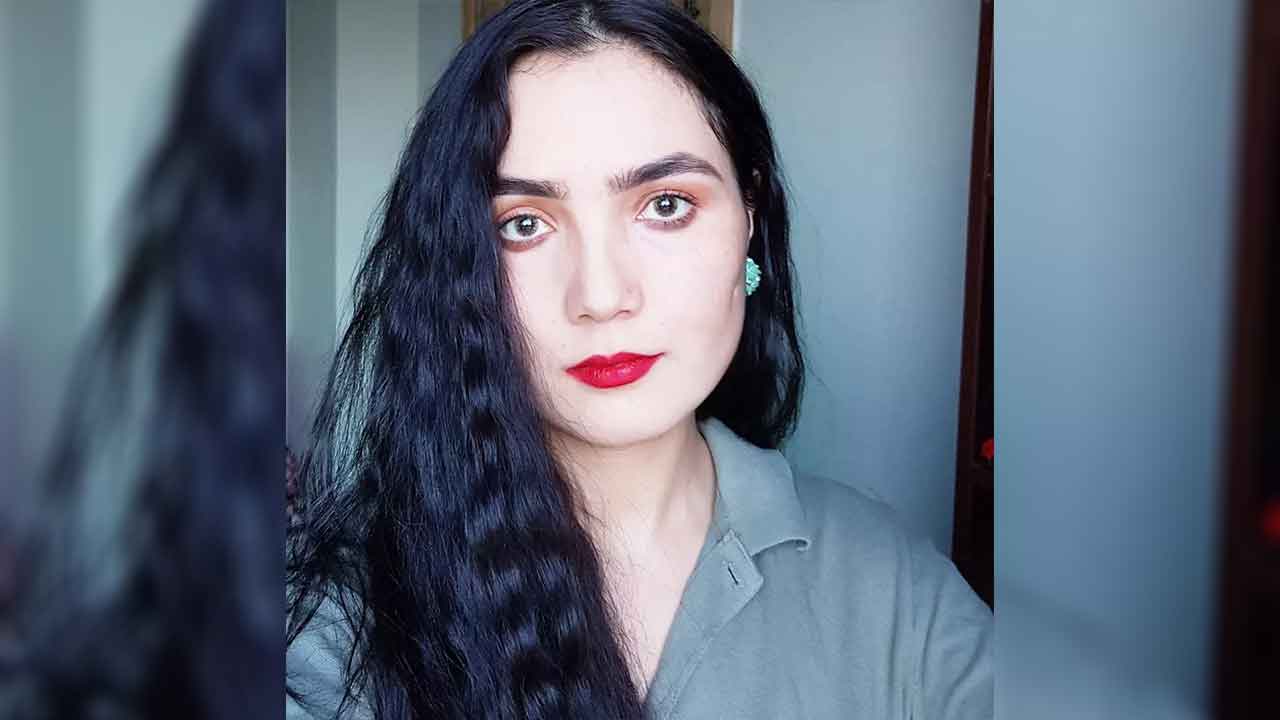
An Interview by: Fatima Roshanian
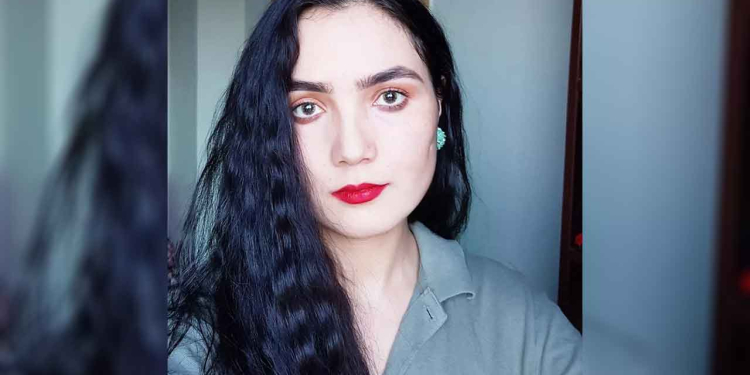
Nimrokh: Warm greetings, Ms. Sultani. I’ve been following your social media presence for a while now. I see you as a bold voice—an activist who speaks out on women’s rights, society, and culture with a sharp, unapologetically critical perspective. But at the outset, I’d love for our audience to hear directly from you. Who is Saiema Sultani? What’s your educational background, and what have been your intellectual pursuits over the last years?
Saiema Sultani: Thank you so much for having me. Well, to start with—who am I? I’d say I’m just one of the millions of Afghanistan’s women who’ve had no choice but to resist. Like so many others, I’ve lived through discrimination, gender-based oppression, and humiliation, all under the weight of a deeply entrenched Islamic patriarchal system. My resistance against this system began quietly, internally. But with the return of the Taliban, and really just seeing how widespread and global patriarchy is, it became crystal clear to me that this inner resistance, while essential and determinant, simply wasn’t enough. So, realizing how important it was to understand the deeper roots of this patriarchal dominance, I began looking into its economic, political, and Islamic foundations. It became a personal priority in my fight against it. From there, I made a conscious choice to step into activism and continued this struggle across different aspects of the real world.
My work has always centered on women. I approach it through a radical feminist lens. The return of the Taliban ignited resistance, brought women together, and pushed forward the creation of a powerful sense of female identity. It pushed many women, myself included, to move beyond individual acts of defiance and toward a shared, collective struggle against this brutal political-Islamic regime. I chose to be part of this shared resistance—even if it didn’t promise immediate results—rather than give in to the situation and accept it as a harsh, unchangeable reality.
Personally, I faced restrictions long before the Taliban came back. My own family, shaped by patriarchal beliefs, prevented me from attending university for years. It was only after a long and exhausting fight with them that I finally enrolled—just two years before the Taliban seized power again. I was in my second year of studying international relations when the Taliban were handed power. That moment really opened my eyes to the deeper, more disturbing ties between political power, the female body, and a gender-based dominance in political Islam. Since then, my writing and activism have focused a lot on exploring the historical place of women in societies run by by oppressive systems—especially under Islamic totalitarian regimes. That’s why, in my writing, I try to highlight the connection between oppressive systems and control over women’s bodies.
Nimrokh: As a social activist and outspoken critic, how do you view the current situation for Afghanistan’s women? Do you think their civil resistance against the Taliban, and political or religious movements, is getting the attention it deserves?
Saiema Sultani: Honestly, it’s hard to capture the reality Afghanistan’s women are living through with just words like “gender-based oppression” or “gender discrimination.” What’s happening is much more than that. It’s a systematic and deliberate attempt to erase women—carefully orchestrated, I believe, by American imperialist forces who, for their own political and class interests, forced extreme political Islam down the throats of Afghanistan’s women.
This erasing campaign hasn’t just pushed women out of jobs, schools and universities, cinema, sports, culture, media, hospitals, public spaces—basically every corner of life—it’s also gone after the very idea of being a woman. Like, they wiped women’s images off city billboards and from beauty salon signboards. They cut off the heads of female mannequins with saws. The ones they couldn’t reach? They forced shopkeepers to cover their heads and faces with black plastic bags. In one particularly chilling act earlier this year, 900 kilos of women’s hair were burned—apparently to protect Islamic dignity. And in another move, they banned women’s voices altogether.
This kind of large-scale defeminization is terrifying. The hate and hostility isn’t just aimed at women’s bodies, rights or freedoms; it’s attacking their existence. It’s trying to silence and suppress anything that shows, describes, or even references women.
But this didn’t come out of nowhere. What we’re seeing now—the systematic exclusion and silencing of women and their identities—is really just an extreme extension of a long-standing, deeply rooted patriarchal view in Afghanistan that has treated women as male honors, stripped of agency, identity, and autonomy. Remember when Basira Akhtar, a law student at Kabul University, was beaten in public for wearing what they called “un-Islamic” clothes? Or when the Ministry of Information and Culture of the Islamic Republic of Afghanistan sent letters to female journalists warning them to wear the Islamic hijab? These events unfolded in the context of Afghanistan’s recent past, shaped by entrenched male chauvinism and the pervasive influence of religious politics.
Now, it’s simply reached a point where misogyny and even femicide are not only normalized but institutionalized—baked right into the government’s power structure. We’re facing gender fascism in its rawest form.
As for whether women’s struggles are being seen or heard—sadly, the answer is no. Sure, global powers and governments like to say they support Afghanistan’s women. But let’s be honest—they’re putting on a show. Instead of cutting ties with the Taliban or taking real action, they have engaged in a campaign of heroization, handing out awards to a few prominent women here and there to make themselves look good, concerned about the plight of women in Afghanistan. It’s all image management.
But Afghanistan’s women don’t need medals or empty praise right now. They need real, no-strings-attached support. They exist within what is effectively one of the largest prisons in the world. Femicide is happening at a horrifying pace. Poverty has become increasingly feminized. In that context, does giving out awards or putting a spotlight on a handful of ‘charismatic’ figures really help? I think it’s time we face the brutal reality: in times of trouble, you’re on your own. Afghanistan’s women have to rely on each other more than ever. They have to hold on, stand together, be each other’s strength. That inner consistency, that mutual support, is what’s going to form the true foundation of the struggle run by Afghanistan’s women.
Nimrokh: One of the main ways the Taliban suppress women is by controlling their bodies and limiting their presence in society. Why is this kind of domination over women’s bodies such a recurring obsession for authoritarian and religious regimes? And what are some meaningful ways to resist it?
Saiema Sultani: Controlling women’s bodies isn’t unique to religious governments and ideologies. It’s something that patriarchy, in all its forms, has always done—it just wears different masks depending on the context. But in religious regimes, the control becomes even more intense. It’s at the core of how they maintain power. In political Islam, legitimacy of the power is often tied to men’s control over women’s bodies. The idea is that the “purity” and structure of an Islamic society depend on controlling women’s bodies. It’s like the foundation of their power structure. They believe that shaping the Islamic ummah isn’t possible without controlling women.
So, it makes perfect sense—at least from their perspective—that the Taliban, as enforcers of this religion, would put so much focus on this. That’s why they’re obsessed with covering women’s voices, policing their clothes, even dictating how they walk in public. But this isn’t just about individuals. When they control women, they’re controlling the future—because women are the ones who raise the next generation. They’re the educators, the nurturers, the cultural transmitters. And under this system, they’re expected to do it all without rights, wages or recognition. In essence, the authority of political Islam is deeply tied to its grip on women’s bodies.
Resistance to this large-scale control can take many forms. One powerful way to push back is by reclaiming and redefining what it means to be a woman outside the confines of this patriarchal, religious narrative. That can be through writing critical essays, poetry, or fiction; expressing through dance and music; even protest nudity. Having open, honest conversations about dominant ideas of femininity—these are all powerful ways to challenge this control.
Creating spaces for women to support each other is key too. When we build solidarity and raise each other’s awareness, we help one another stay out of the traps set by dominant gender roles. It’s not just about saying “no” to being controlled; it’s about understanding what that control means and refusing to internalize it.
By doing all this, women start to build a shared identity—one that’s grounded in resistance, not submission. And in that space, they stop seeing themselves through the lens of Islamic stereotypes and roles like mother, wife, daughter, or sister. Because before any of that, a woman is a person. A full, complex, thinking human being.
Nimrokh: History has shown that violent resistance often leads to yet another cycle of violence. Do you think non-violent movements and civil resistance led by Afghanistan’s women can bring about lasting, sustainable change?
Saiema Sultani: Absolutely, yes. See, physical or violent struggles tend to just repeat the same logic of power—they reduce everything to brute force, to defeating or destroying the “other.” That kind of mindset doesn’t break the system—it just reshapes it with the same foundation. So what we get is often a surface-level change, but not a real, deep transformation. Oppression, injustice, discrimination, poverty, insecurity—they might shrink a little, but the roots remain untouched.
Violence is part and parcel of the patriarchal system. It’s built on dominance, on physical strength, on the belief that whoever hits harder wins. That’s why feminist movements have always taken a stand against war, violence, and terrorism. They’ve been the loudest voices in anti-war and peace movements all over the world, and that’s not random—it comes from lived experience. Women have borne the brunt of war and violence. They’ve been raped, silenced, terrorized. So their resistance to violent struggle isn’t theoretical—it’s deeply personal, collective, and painful.
From a feminist point of view, real change has to start at the root. It’s not enough to replace one structure with another—we have to change the nature of the structure itself. History is full of moments where things looked like they were getting better, but the core mechanisms of injustice and oppression stayed intact.
Take the “Woman, Life, Freedom” uprising in Iran, for instance. It began as a powerful rejection of the Islamic Republic, with even symbolic gestures—like a raised middle/rape finger—signaling defiance. But that same symbol was later used by some to turn against Afghanistani refugees, chanting “Death to Afghani.” It’s heartbreaking. That movement, despite its energy and hope, ended up absorbing the very patriarchal, nationalist ideas it was supposed to fight. It couldn’t step outside the old mindset, and in the end, it got swallowed by it, by the Islamic Republic regime.
That’s the danger with physical struggles. You can’t solve these deep problems by just eliminating people or shedding more blood. The real issue is in the dominant ideas—the systems of thought that hold power in place. And those can only be dismantled through conversation, awareness, education, and peaceful protest.
People are exhausted. They need a new structure that lets go of punishment and mockery as tools of control. That kind of shift can only come from the ground up. Feminism believes that the patriarchal system thrives on physical domination because it’s afraid of mass, collective resistance. So when we adopt violent methods, we’re playing right into its hands. It becomes a contest—the most violent one usually wins—and that just reinforces and fixates the very violance-based system we’re trying to break.
Nimrokh: Some people say women’s street protests and civil movements in Afghanistan haven’t succeeded because the world hasn’t backed them. In your view, why hasn’t the international community taken a stronger stand against the systematic oppression of Afghanistan’s women?
Saiema Sultani: Honestly, I think we often have a somewhat idealized—even imaginary—view of the international community. We assume that they genuinely care, that their top priority is what’s happening to women in Afghanistan. But the reality? Women’s rights are often just a convenient bargaining chip for international powers to push their own political agendas.
Take the Doha process and the power handover to the Taliban—it speaks volumes. Two decades ago, the international community forces led by the U.S., came into Afghanistan under the banner of defending women’s rights, human rights, democracy, and fighting terrorism. And yes, to some extent, they did open up opportunities—education, jobs, training—for women in urban areas.
But let’s be honest, even back then, the democracy we had wasn’t fully secular or inclusive. Islamic Sharia was already deeply embedded in our legal and judicial systems, even under the republic. There were stories—painful ones—of women going through hell just to get a divorce. They’d fight with everything they had, begging the courts to free them from abusive husbands. But in the end, that woman—drained by despair, burning with anger, and completely powerless—had no choice but to walk back into the house of the same man whose abuse had pushed her through every court and government office, begging for justice. Only now, the husband was even more calculated, more revengeful in the way he hurt her.
And that’s just urban women. For rural women—the vast majority—the situation has barely changed in decades. They’ve lived under strict, patriarchal interpretations of Islam for as long as I can remember. Whether the area was controlled by the Taliban forces or some jihadi group members, the result was the same: women were silenced, controlled, erased. What urban women are going through now under the Taliban, rural women have lived this reality for decades—since the Mujahideen, the first Taliban regime, and all through the so-called republic era.
But during all that time, did we ever hear the international community speak out about the Islamic gender apartheid rural women faced? About the suffering of the forgotten majority? No, not a word.
And now, look—Roza Otunbayeva, the UN’s representative, wearing the Taliban’s imposed hijab, says things like, “The world hasn’t properly appreciated the Taliban’s achievements.”
So really, I think the international community gave us their answer long ago. We just couldn’t believe it—it felt too shocking, too unreal to accept. Maybe that’s why we keep clinging to this false hope—that they care, that they can and will come help us.
Nimrokh: In Afghanistan, the fight for women’s rights extends far beyond the streets. It lives in art, literature, media, and every corner of public life. In your view, how do these tools play a role in resistance and in reshaping how women are seen?
Saiema Sultani: What really adds to the power of these tools is that they’re relatively safe. Through art, media, and tech, women can push back against patriarchy without always having to risk their physical safety. These platforms let them question and reject the traditional, patriarchal image of what a woman should be. And at the same time, they can offer something new—something more diverse, more layered. A kind of femininity that’s not limited to one voice or one face.
It also gives women space to build and show an independent identity—one that maybe hasn’t had the chance to be seen before. This kind of expression, through art, media and digital means, really opens up a space to confront the way patriarchal history has shaped gender roles. It’s like, through these tools, women aren’t just participating—they’re rewriting the story entirely.
And maybe even more importantly, it builds something powerful among women themselves: trust, solidarity, a sense of sisterhood. That connection means they don’t have to rely on the same old, patriarchal systems—or on men—to solve their problems. They can lean on each other instead, on this power of sisterhood.
Nimrokh: In a time when oppression feels heavier than ever and hope seems hard to come by, how can we encourage the next generation of Afghanistan’s girls and women to keep fighting?
Saiema Sultani: I think storytelling can make a big difference here. When women share their personal journeys—their struggles and victories—it can really inspire others. Just writing about what the fight has meant in their own lives—what they’ve been through, how they’ve pushed through challenges, how those experiences connect to the broader struggle for all women, and how personal stories feed into a collective fight—can be incredibly powerful. When these personal struggles start to come together as a collective fight, that’s when real change starts to happen—for women’s lives, their rights, and their future.
Creating space for discussions around gender can also spark something important. These conversations have a way of pulling people in—especially women who are trying to make sense of their place in a patriarchal world. Through engaging with gender topics, many women start to develop a stronger awareness and a sharper sense of what’s unjust. Over time, this awareness often turns into a sense of responsibility. They begin to feel like they have to be part of the movement.
Eventually, we’ll start seeing more and more women forming groups, circles of resistance, all working toward one thing: reclaiming their human rights. And within these spaces, there’s a kind of solidarity that grows—something deep and powerful. It’s not just about shared pain; it’s also about shared purpose. There’s empathy, support, and trust being built among women who are all pushing back against the same systems of control.
And you know, we also have to remind each other that even the smallest acts of resistance matter. They might seem insignificant on their own, but collectively, they build momentum. Every bit of pushback, every voice raised, is part of a larger fight for change. That spirit of resistance—it needs to be nurtured and spread.
Nimrokh: A lot of political and religious movements tend to portray women as the very symbols of a society’s “honor” or “identity.” That portrayal often becomes an excuse to control and suppress them. How do you think we can push back against and change this mindset?
Saiema Sultani: One of the most effective ways is to expose the patriarchal, possessory roots of the whole idea of “honor.” We need to show that it’s not some eternal truth about women—it’s just a social construct, built and reinforced over time by systems of male dominance. Through art, media, literature, and open dialogue, we can challenge this narrative and reveal it for what it is: a tool for control. A way to strip them of their freedom and identity, to exploit them, to reduce them to objects under male ownership. Historically, it’s been repackaged in different forms, but the message has stayed the same—women are someone’s property, someone’s honor, and men are expected to guard that honor and property at all costs.
And when women are seen this way, their sense of agency disappears. Their voices are silenced. Their rights and freedoms are denied. They’re treated as less-than, mindless, as beings who need to be controlled, managed, or even punished—and that kind of treatment only leads to harm, both mental and physical.
But here’s the thing: this system doesn’t just hurt women. It traps men too. In some cases, the pressure to “protect honor” drives men to extremes—sometimes even costing them their own lives or leading them to take someone else’s. Either way, the price is devastating: death, prison, or retaliation in kind (qisas).
That’s why it’s so important to understand that this whole structure of “honor” is damaging for everyone, not just women. And people are starting to push back. For example, in Iran, there have been online campaigns where men have declared, “I’ve no honor!” It might sound provocative, but it’s a bold way of rejecting the toxic expectations placed on them. They’re tired of paying the price, and they’re tired of carrying this inherited shame that stains the whole society.
So, what can be done? Encouraging critical conversations, writing openly about the harms of this so-called honor, and supporting online movements like “I’ve no honor” or “Women are honor of nobody!”— These are all powerful steps toward breaking down this gender stereotype.
Nimrokh: Where do we draw the line between objectifying women’s bodies and women using their bodies deliberately as a form of protest? And when people react strongly to nudity in protests, can that be seen as a sign of patriarcal dominance? Why?
Saiema Sultani: That’s a really important question—thank you for bringing it up. The difference comes down to agency. If a woman doesn’t have control over her own body, if she’s taught to believe it belongs to her male guardian or is something to be hidden or managed by others, then that’s objectification. It’s when outside forces take over her body, without her will.
But when a woman chooses, consciously and intentionally, to use her body in protest, in fighting oppression and exploitation—when it’s her decision—that’s something completely different. That’s not objectification. That’s subjectivity.
Think about it this way: objectification happens when a body is used by someone else, without consent or intention from the person it belongs to. That is criticizable. Otherwise, why don’t we ever criticize men using their bodies to show strength or dominance? Men have always done that, but no one ever calls that objectification.
This double standard says a lot. It’s part of a broader patriarchal strategy—one that tries to keep women from claiming ownership over themselves by labeling their self-expression as “objectification.” But when men do the same thing—as a show of power—it’s just seen as normal, nothing out of the ordinary. So it’s pretty clear what this kind of discourse is really trying to do—and why it keeps getting pushed and reinforced.
Nimrokh: Do you think the Taliban are the only force standing in the way of women’s progress in Afghanistan?
Saiema Sultani: I really wish it were that simple. But it’s not. If we look at the Taliban without also examining the deeper roots—like Islam, colonialism, and nationalism—we’re honestly just fooling ourselves. That kind of thinking doesn’t just hold us back—it actually risks turning us into tools for others, especially for the Taliban’s so-called “opponents” who, frankly, often see women in the exact same way.
And here’s the other thing: if we keep acting like the Taliban are the only problem, then what happens when they’re gone? That kind of narrow view sets us up for a short-term struggle with a clear finish line. But that’s not how long-term change works. Look at the early feminist movement in the U.S.—it focused heavily on winning the right to vote. And once that was achieved, people and statesmen started telling women, “Well, you got what you wanted, so sit down now.” The momentum faded. That could very well happen to Afghan women too. If we point all our energy just at the Taliban, then the day they’re gone, we’ll surely hear the same thing: “You got what you wanted. Taliban are gone. No more protests. No more noise.” That’s dangerous.
So we really need to rethink how we define this struggle. Focusing only on the Taliban is limiting—and frankly, it blinds us to the bigger picture. The Taliban aren’t just some isolated anomaly. They’re part of a broader system—a deeply rooted, sexist religious structure that’s been hurting, torturing and killing women for over 1,400 years of Islamic history. That narrow focus also pushes us into this trap of romanticizing, vulgar ideas like “true Islam,” “moderate Islam,” or drawing lines between “extreme” and “non-extreme” versions. Farkhunda was burned alive during so-called moderate Islam. That was also the era when women were imprisoned for fleeing abusive homes, and their sexuality was tightly policed.
The truth is, whether it’s framed as moderate or not, Islam is built on gender-based fascism and chauvinism. It’s a system that places men above women, full stop. And it doesn’t even acknowledge gender or sexual minorities.
On top of that, if we only focus on the Taliban, we completely overlook the huge role that global powers—especially the U.S.—played in bringing them back to power. Many women today, intentionally or not, gloss over that reality. They ask these same global powers to help Afghanistan’s women and boycott the Taliban, while ignoring the fact that these very powers helped create and now continue to support the Taliban in one way or another. Instead of criticizing their imperialistic approach or holding them accountable, these women paint them as heroes—as saviors of Afghanistan’s women. But that’s a deeply censored and misleading narrative. The truth is, without the backing of these governments, the Taliban probably wouldn’t last a month—let alone all these years.
Nimrokh: Finally, if you could share a message with the women still in Afghanistan, facing harsh realities every day, what would you say? How can they keep going under such heavy oppression?
Saiema Sultani: I know things are incredibly difficult. That much is obvious. But even in the deepest darkness, don’t let go of hope. Keep resisting—quietly if you must, from wherever you are, even if it’s just inside your own mind. You don’t have to risk your safety to fight back. Resistance doesn’t always have to be loud or visible.
Even if they tie your hands, blindfold your eyes, silence your mouth, and fill your ears with the idea that women are weak or meant to be slaves—don’t believe it. Push back against those words in your thoughts. Tell yourself, believe that women are independent human beings who deserve freedom and equal rights—and one way or another, they’ll reclaim everything that’s been taken from them. That inner resistance matters. Because if you don’t fight those lies within yourself, there’s a real risk that one day, you’ll pass them down to your daughters, your sons without even realizing it. And that’s exactly why it’s so important to keep the resistance alive—because even a silent fight can shape the future of a whole generation.
Don’t isolate yourself. Solitude makes it easier for oppression to take hold—it gives it room to grow. Find other women. Build connections with those who are active, aware, and moving forward. This will help you tap into their knowledge and reach out to them for support when you’re in a tough spot. Just knowing you’re not alone—that you’re part of something bigger—can make you stronger and more self-confident. There’s a global women’s movement growing stronger every day—and you’re part of it, even if it doesn’t always feel visible.
Surround yourself with ideas. Read. Write. Listen to feminist songs that speak of protest and hope—songs that light a fire in your soul. And one more thing—study. Learn about political systems and power relations. Once you understand them, dive into feminist studies. Because if you don’t understand political systems and power dynamics, you won’t really be able to grasp feminism either. It’s important to recognize that feminist studies didn’t emerge in isolation—they were written as a response to, and a critique of, existing political systems. That’s why to truly understand feminism, you first need to understand the history and structure of patriarchy. You have to look at the institutions, beliefs, and systems that have allowed gender-based oppression to take root—and how they keep reproducing themselves, generation after generation.