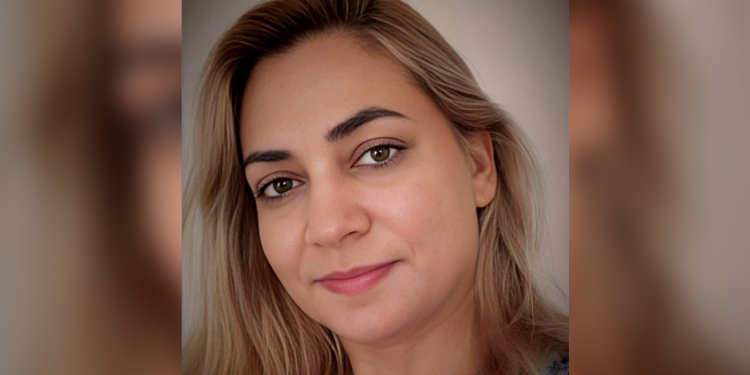
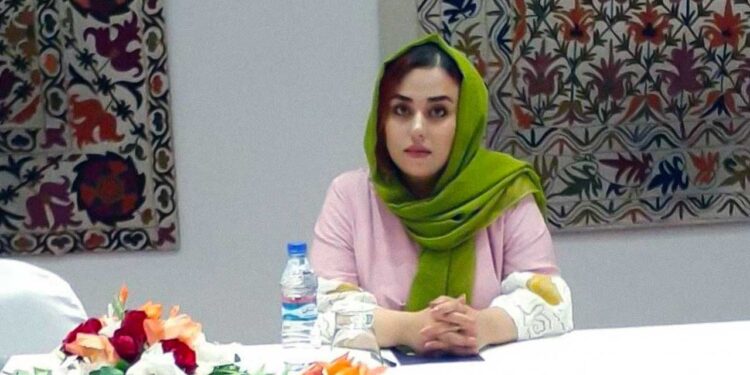
By: Parisa Azada
I am a girl who was born in exile; in a rented house in the bleak outskirts, where my mother spoke with a Kabuli accent choked with grief, and my father secretly listened to the news of Afghanistan at night—because he did not want the memory of the homeland to make us feel even more displaced.
Years later, when the Taliban left, we returned. I was a child who had heard of a real home only through her father’s words. Kabul was a myth for me—a city that in my father’s stories was always rainy and overcast. But when we arrived, the streets reeked of gunpowder and were shrouded in darkness—the darkness of the Taliban’s first rule. In those days, “hope” had taken root in Kabul’s alleys, and I too walked in pursuit of my dreams. From then on, as I grew up, I studied, learned skills, strove to recognize myself through my womanhood and abilities, and fought for my dreams within a misogynistic society—until the Taliban’s return.
But everything sank once more into the depths of darkness on the morning of August 15, 2021. After twenty years, Kabul’s streets once again fell under the boots of the forces of darkness and terror. Yet I had learned to fight for freedom. Now, four years have passed since that day, and I see nothing but darkness and ignorance. We women have spent four years under the Taliban’s rule—days when the sun has been unable to shine into our homes, and the city has turned into a city of fear and terror for us.
When the Taliban took over Afghanistan, I was in my final year at university. With all the difficulties, amid the terror of the Taliban, every morning I woke with the fear that they might forbid me from attending, yet I managed to finish my degree. It was during this time that women’s voices of protest in Kabul, Herat, and Mazar rose against the Taliban’s oppression. I could not remain silent. I went to the streets—with a placard heavy in my hands and a heart pounding with fear; but I believed profoundly that silence was death. We shouted, we raised placards, we called out the word “freedom”; but the Taliban, instead of listening, lashed us, and instead of responding, they fired bullets.
Even though my family opposed my joining the protesters to protect me, I believed strongly that someone had to stand, someone had to cry out the pain; I accepted this risk with my whole being and chose to stand against tyranny, so that I could do something for my fellow-women.
With each passing day and the spread of discrimination and fear, I and a group of protesting women still stood firm, our voices raised against oppression and inequality.
November 14, 2023
This date reminds me of a harsh and devastating day. On this date, it was planned that we would protest in an enclosed space against the Taliban’s inhuman laws imposed on women, the insecurity in western Kabul, the killings of Hazara people in Urozgan, and the forced displacement of Hazaras in Daykundi province.
Early in the morning, when it was relatively cold, I went to Pol-e-Sorkh to collect the protest banners that I had, with great effort and pleading, given to the print shop the day before. When I reached the print shop, its door was padlocked. I called the owner, and after several attempts, he finally answered, asking, “Where are you?” I said, “Near the shop.” He gave me an address, in front of Aysan pastry in Pol-e-Sorkh. I hurried there. When I arrived and called him, he asked me to get into a black car parked across the street.
At that moment, I felt something bad was about to happen—I had to escape. I took a taxi and headed toward Golayee-Dawakhana. Suddenly, I realized that the same black car was following me. Midway, the taxi driver said he had something urgent to do and could not take me to my destination. I got out of the taxi and, through the back alleys, I made my way to Pol-e-Sokhta, to the station where buses leave for Barchi. I felt that I had managed to escape. I got into a public transportation vehicle and moved toward Barchi.
When I reached the alley leading to our house, I was confronted by a military vehicle and the Taliban members. My whole body started trembling again. They had seen me, and there was no way to escape. I pulled up my mask and pretended nothing had happened. I lowered my head and tried to walk past them. “It’s her,” one of them said. Another grabbed my arm and slapped me hard across the face. I fell to the ground, and then they lifted me up again. Two of them, with punches and kicks, threw me into the vehicle.
I could not avoid resisting; I screamed in hope that someone might help me. At that moment, my head struck the car door, and I lost consciousness for a moment. Every time on the way I tried to lift myself and shout, they beat me savagely and forced my head down.
Later, when they finally removed the scarf covering my eyes, I found myself in a room decorated with the Taliban’s white flags. A burly man slapped me hard across the face, commanding: “Take this whore away.” I realized instantly that they label and accuse anyone who dares raise their voice against darkness and tyranny with whatever name they please—and that they torture under the guise of religion and inhuman justification.
A short while later, I was left in an empty room with my hands tied. My whole body was trembling with fear. I remained in that dark room for hours. Then several armed men transferred me somewhere else. This time, I found myself in a solitary prison cell—where for 42 days I was tortured during the day and at night, because of the pain, I could not even lie my body down on the ground.
During this time, I faced different forms of torture by the Taliban: they hung me from the ceiling, poured cold water on me in the freezing prison air, covered my head with plastic, and subjected me to several other psychological and verbal tortures. They called me an infidel (kafir) and, many times, insulted and tortured me because I was Hazara and Shia, saying: “Killing you is permitted.”
I was not allowed to contact my family during this time. With every passing day in prison, I imagined my death more vividly. The Taliban repeatedly told me that my sentence had been issued and that I would be “stoned to death.” They called me an agent of foreigners and Americans. I could not make them understand that I was fighting for my freedom—for not losing my human rights, for being present and meaningful in the society.
After 42 days, once they had taken a written pledge from me and my family that I would no longer engage in political or civil activity, they released me. Now, more than two years have passed since that event; yet its damage is still with me. My right eye and ear, my back, neck, and stomach have been harmed by the torture, and the terrifying nightmares still do not release me. At night I cannot sleep and have to take sleeping pills.
After my release, the only thing left untouched within me was my belief in freedom and resistance—something that for centuries has rescued people from the depths of darkness and brought them to equality. With each passing day, I believe more deeply in Simone de Beauvoir’s words, who said: A woman becomes free when she recognizes herself as a subject, not an object; when, instead of accepting an imposed fate, she exercises her own will.
Some time after my release, I was forced to leave Afghanistan—just like my mother, who during the Taliban’s first rule was forced to migrate. But I was forced to flee for survival. To flee from a homeland that embodies the meaning of my existence and that in all my dreams shines with splendor and beauty; splendor in which women and men are truly equal.
Now, in the fourth year of the Taliban’s takeover, I hear in exile the cries of women weeping behind closed doors. Girls deprived of going to school, of working, of stepping outside; women who are not even allowed to laugh in the street. Today’s Afghanistan is a vast prison for women, with towering walls of ignorance and prejudice.
For me, migration was not the start of tranquillity; it was only another form of fear. When I left Afghanistan, I thought I had escaped the darkness. But I did not realize that exile itself is another kind of darkness. Now I live in a country whose language I do not understand well, whose places I do not know, whose people are strangers to me—and every moment passes under the fear of deportation. The shadow of fear still hangs over me; not fear of the Taliban, but fear of refoulement to a homeland where being a woman is considered a crime, and where the forces of ignorance seek to deny and erase them.
Now I feel, I understand the true meaning of displacement and statelessness. Here, no one asks what has happened to you, what suffering you endured to reach this place, or from which part of the world you have carried such immense sorrow. Here, people are identified by a piece of paper. Every time I have seen the officers of the immigration department, I have looked at them with eyes full of fear and pleading—hoping they wouldn’t deport me.
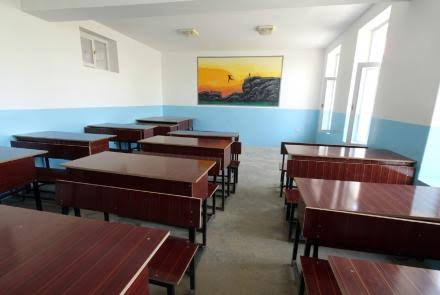
Yet despite all my suffering, I still stand. I believe that our voice is our survival and endurance. I stand—for the girls who are imprisoned in their homes by laws of blind ignorance; for all the dreams trapped in Taliban darkness; for all the girls who were cut down on the path of learning and awareness at Sayed al-Shuhada School, Kawaj Educational Center, and Mawoud Educational Center.